




Understanding Different Cryopreservation Methods
Have you ever wondered how doctors store embryos, eggs, or even stem cells for years? Cryopreservation methods make it possible to preserve these living cells and tissues safely for future use.
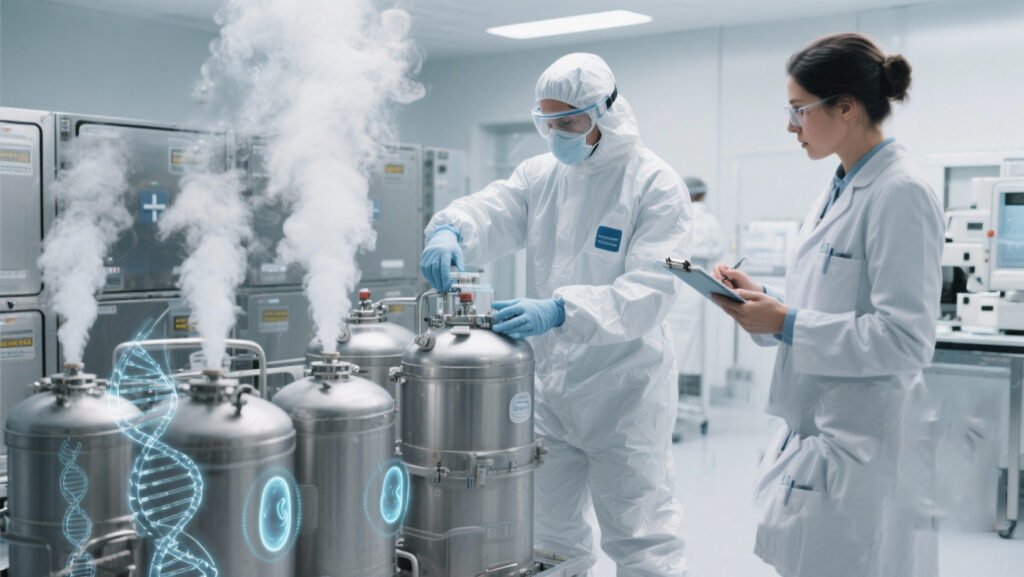
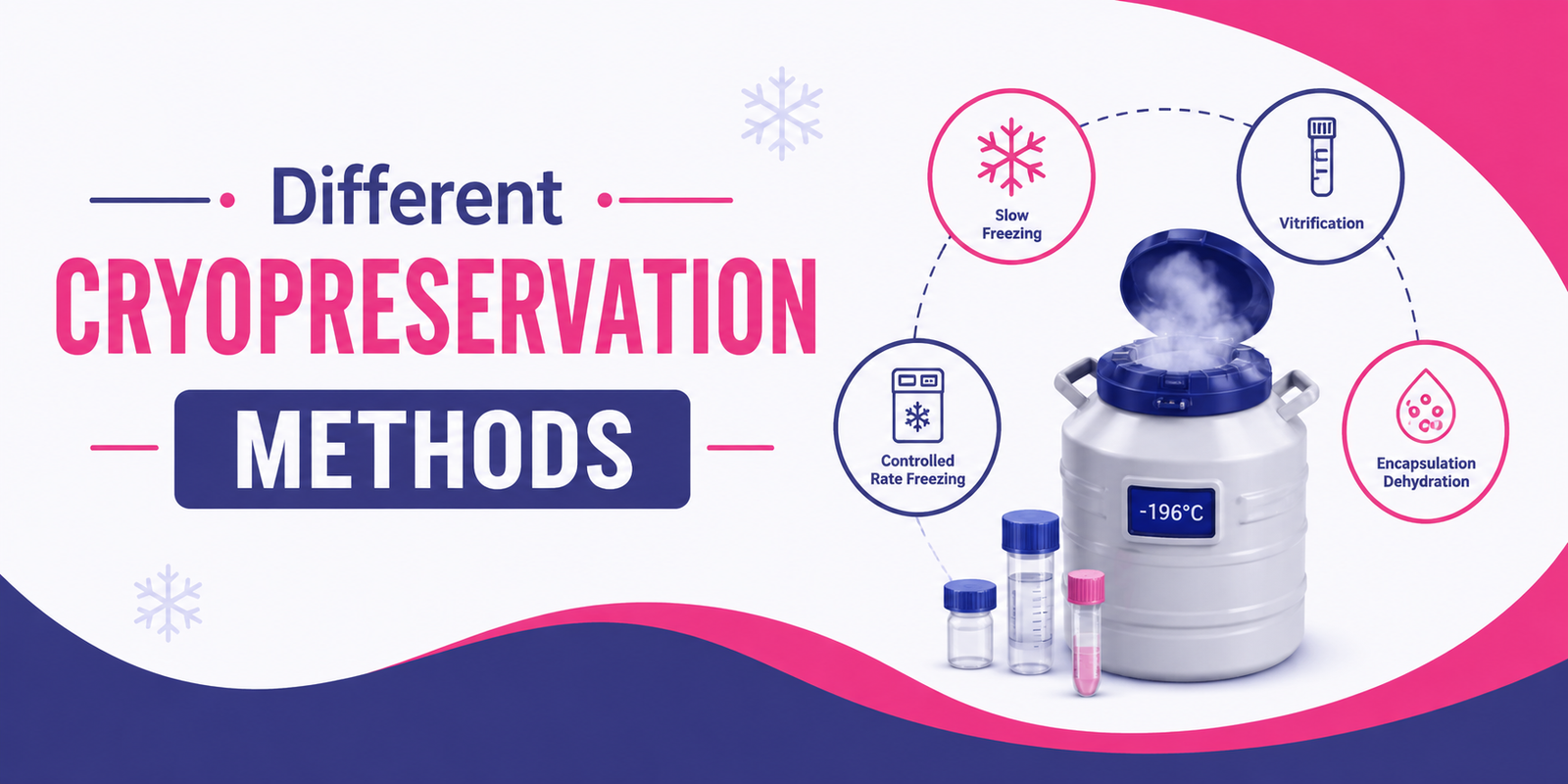
In simple terms, cryopreservation is the process of freezing living cells and tissues at ultra-low temperatures usually in liquid nitrogen at –196°C. At this temperature, all biological activity stops, allowing scientists to preserve cells until they need them again. But here’s the tricky part: you can’t just pop a cell into the freezer like leftover food. If ice crystals form inside, they can rupture the cell and destroy it.
That’s why scientists have developed different methods to freeze cells safely. Let’s break them down in a way that’s easy to understand.
1. Slow Freezing – The Gradual Approach
Think of slow freezing like cooling a hot cup of tea slowly rather than putting ice cubes in right away. Scientists lower the temperature gradually (around 1°C per minute), giving cells time to adjust. Scientists add special protective chemicals called cryoprotectants, such as glycerol or DMSO, to help prevent ice crystals from forming.
- Where it’s used: Storing sperm, embryos, blood cells, and stem cells.
- Why it works: Reliable, tested for decades, and gives good survival rates.
- Downside: Needs expensive freezing machines and still carries a small risk of ice crystals forming.
2. Vitrification – Freezing Without Ice
If slow freezing is like chilling tea, vitrification is like instantly turning it into glass. Here, scientists cool cells super-fast after treating them with high concentrations of cryoprotectants. The water inside doesn’t have time to form ice, it turns into a glass-like solid.
- Where it’s used: This is now the gold standard in IVF clinics for preserving eggs and embryos, since they’re very sensitive to ice damage.
- Why it works: Almost no ice crystal risk, higher survival rates, and excellent results after thawing.
- Downside: Requires skill, and the high concentration of chemicals can be toxic if not handled carefully.
3. Cryoprotectant-Free Freezing – Going Chemical-Free
This method skips chemical protectants altogether. Instead, it uses extremely rapid cooling or dehydration to avoid ice damage.
- Where it’s used: Mostly in labs for preserving tiny organisms like bacteria or worms.
- Why it’s interesting: Avoids chemical toxicity.
- Downside: Still experimental for larger, more complex cells (like human eggs or tissues).
4. Encapsulation–Dehydration – Wrapping Cells in a Bubble
Here, scientists place cells in protective capsules, such as alginate beads, dehydrate them, and then freeze them. This method reduces stress on the cells during freezing and thawing.
- Where it’s used: Mostly in plant cryopreservation, especially for rare or endangered species.
- Why it’s valuable: Helps conserve biodiversity by storing seeds or tissues safely.
- Downside: More complicated than other methods and doesn’t always work well for animal cells.
5. Lyophilization (Freeze-Drying) – Like Making Instant Coffee
If you’ve seen freeze-dried coffee or fruits, you already know the concept. In this method, scientists freeze the sample and then dry it under a vacuum, which removes water directly as vapor. Researchers can often store the dried material at low temperatures without using liquid nitrogen.
- Where it’s used: Common for vaccines, bacteria, and pharmaceuticals.
- Why it’s useful: Cheaper to store and transport, since you don’t need ultra-cold conditions.
- Downside: Most complex cells don’t survive rehydration well, so it’s not practical yet for things like eggs or embryos.
How Do Scientists Choose the Right Method?
Scientists choose the method based on the type of cell or tissue they want to preserve.
- Eggs and embryos → vitrification works best.
- Blood and stem cells → slow freezing is still widely used.
- Plant tissues → encapsulation-dehydration.
- Vaccines or bacteria → freeze-drying.
Other factors, such as cost, available equipment, and the need for high survival rates, also influence the choice.
What’s Next for Cryopreservation?
The future looks exciting. Scientists are:
- Designing non-toxic cryoprotectants to make vitrification even safer.
- Using nanotechnology to cool cells faster and more evenly.
- Working toward the Holy Grail: organ cryopreservation, which could make organ transplants easier and reduce waiting lists.
Imagine being able to freeze a healthy kidney and use it years later when a patient needs it, that’s the dream researchers are chasing.
Final Thoughts about Cryopreservation Methods
Cryopreservation is one of the most transformative technologies in modern biology and medicine. From preserving fertility to conserving endangered plant species, the ability to store life at sub-zero temperatures has opened doors to innovations once considered impossible. By understanding the different methods, slow freezing, vitrification, cryoprotectant-free techniques, encapsulation-dehydration, and freeze-drying, we can appreciate the science that makes long-term biological preservation possible and the future possibilities it holds.